
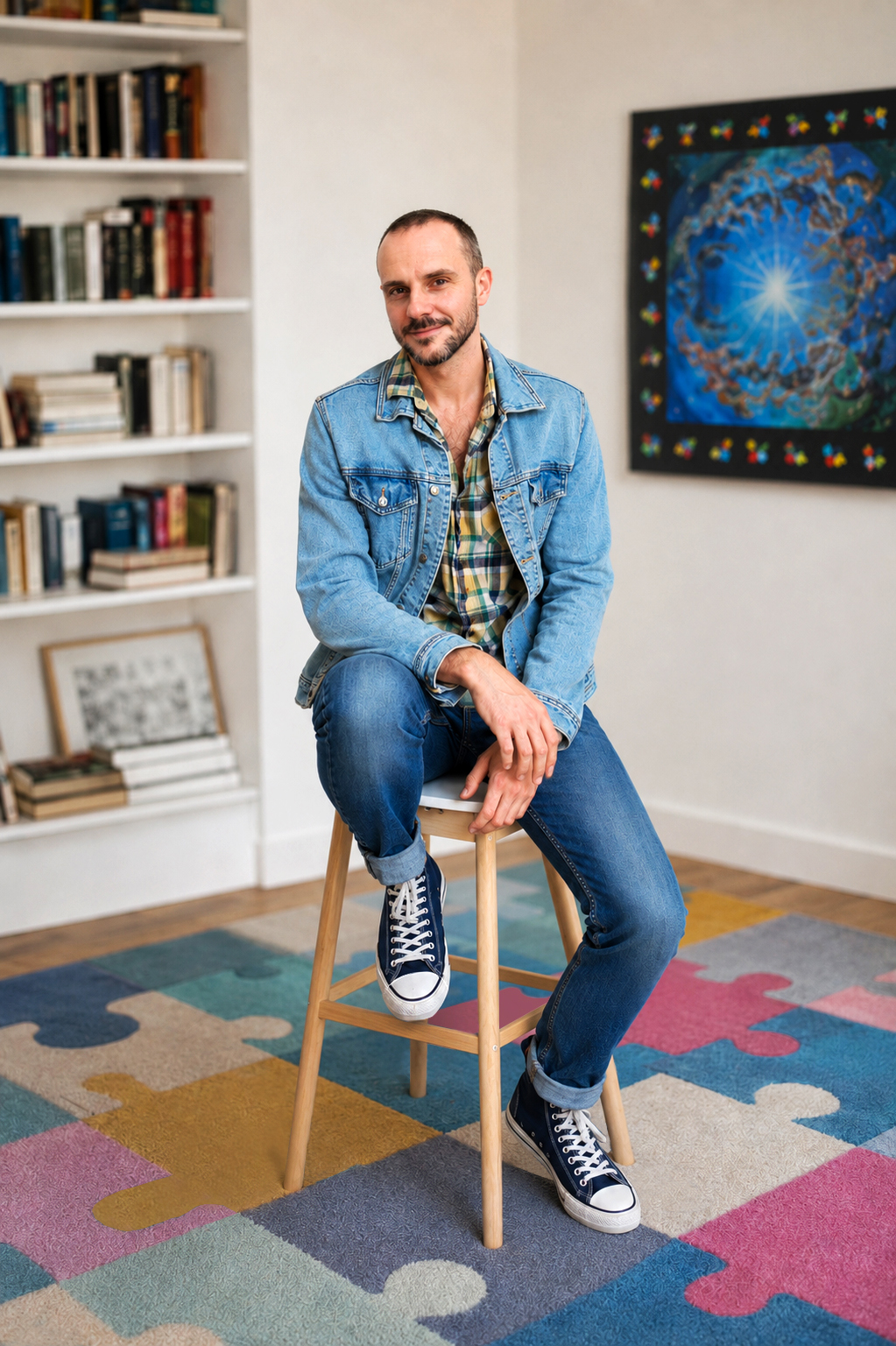
Where did Puzzlums come from?
For many years, I wondered why I create in this particular way. Why isn’t it enough for me to just paint a picture? Why isn’t it enough for me to just put things together? Why am I constantly searching for connections? Over time, I came to understand that what resonates most deeply with me are the relationships between the parts that make up the finished work. It was from this sensibility that Puzzlums were born—pictures that can be assembled, taken apart, rotated, and reassembled, revealing new meanings along the way. To me, Puzzlums are more than just puzzles. They’ve become a way of looking at the world and at people. Perhaps it’s only when we view human life as a picture composed of many parts that we begin to better understand its story and perceive the fuller meaning of existence. It’s possible that each of us is a story made up of fragments that form a single, unique puzzle. Sometimes the answer doesn’t come when we’re looking for something new. Sometimes it’s enough to connect what already exists. It was precisely this need to connect that gave rise to Puzzlums — a space where imagery meets the puzzle, art meets experience, and fragments begin to form a greater whole. It’s a world where seemingly impossible connections become possible.
About the Author
František Szymczysko is the creator of the Puzzlums and the founder of the artistic and educational project "Puzzlum Tour” (known as "Puzzle Tour” until 2025), which aims to provide the widest possible audience with direct access to Puzzlums (oil paintings that can be touched, experienced, and rediscovered). These works are not merely meant to be viewed — through touch and actions such as moving, arranging, or rotating them, the viewer becomes a co-creator of their composition.
The artist’s work stems from a deep need to experience and communicate emotions through imagery. It emerges in a space of silence and focus, combining sensitivity with inner strength. His works are an invitation to an encounter — with the artwork, with another person, and also with oneself. This is particularly true of the "Puzzlum” works, which encourage mindful engagement and active participation, transcending the boundary between the artwork and the viewer.